
Culinary Expertise for Food Businesses
Develop better food.
Build more repeatable execution.
SUVAIRA is remote-first by design. You describe the requirement, we work out what kind of expertise it actually needs, and we assign a specialist suited to that problem — not the nearest available chef.
There is no charge to submit your requirement or to have it reviewed.
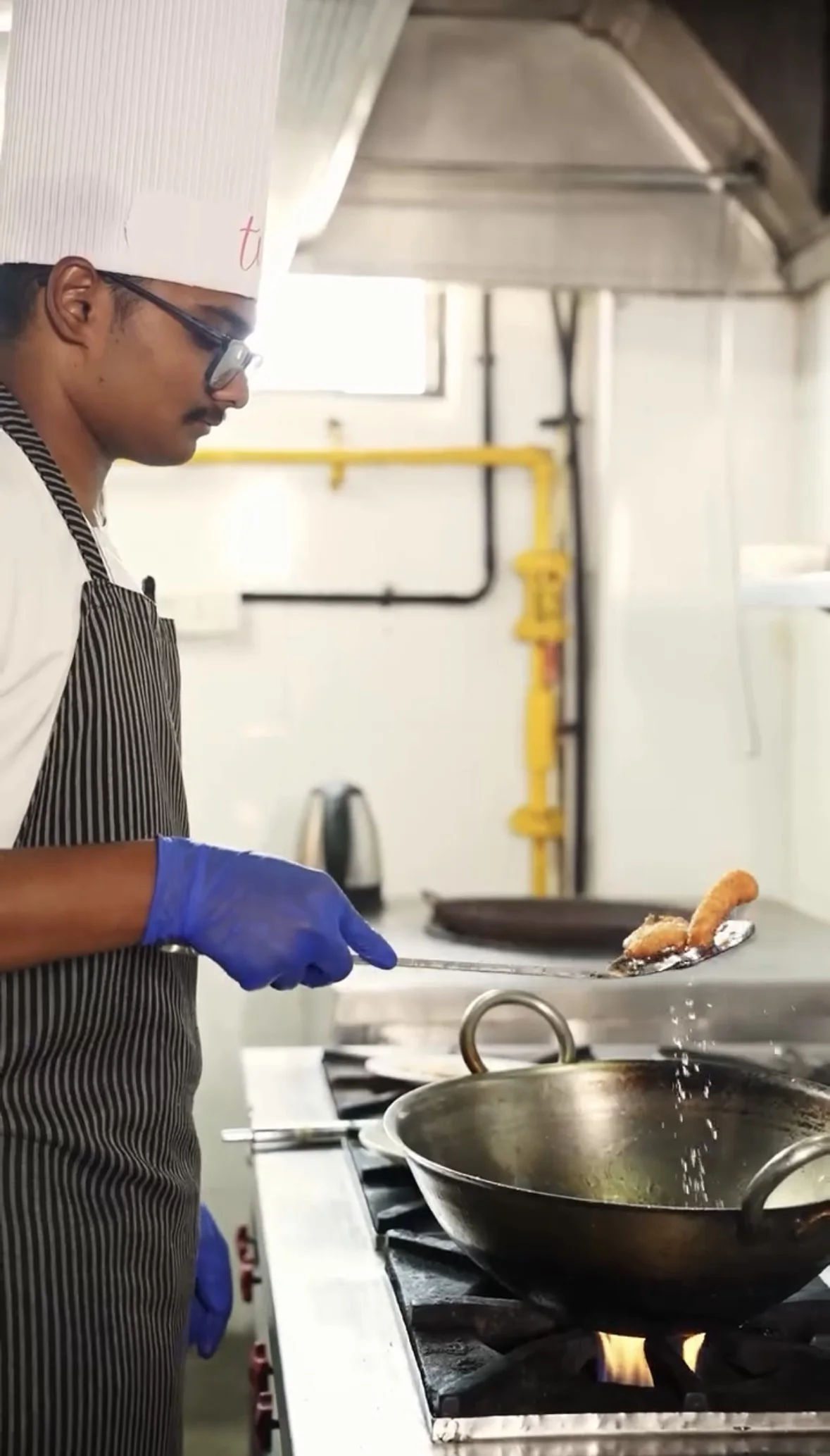
01 — Develop
Recipe & Dish Development
You have a concept, a gap on the menu or a dish that is close but not right. A specialist works with you on the food itself — flavour, structure, technique and how the dish will behave in your kitchen rather than in a test kitchen.
Who it’s for
Restaurants, cloud kitchens, cafés, food product businesses and hospitality teams adding to or reworking a menu.
Typical triggers
- A new menu section with no dish behind it yet
- A dish that tastes right once and never again
- A concept borrowed from another region that has not translated
- A product that works at sample scale but not in the kitchen
What we review
- The cuisine, the dish and the result you are aiming at
- Your current method, if one exists
- Equipment, kitchen constraints and the skill on your line
- Where the dish sits on the menu and how it will be served
What the specialist does
- Work through the dish with you over Zoom, in stages
- Interrogate technique and ingredient function rather than swapping items
- Give you something your kitchen can actually execute, not a demo plate
- Iterate against what you report back between sessions
Possible outputs
- A finalized recipe
- Method notes and technique guidance
- An action plan for further testing
- A Custom Master Guide, where the project scope includes one
What remote delivery can and cannot do here: Remote development depends on your reporting back honestly on taste and texture. A specialist cannot taste the dish. Where a project genuinely turns on sensory judgement that cannot be described, we will say so before starting.
02 — Standardize
Recipe Standardization
The dish already works when the right person makes it. Standardization turns that into a method with quantities, control points and cues, so the result survives a change of cook, a change of shift or a change of volume.
Who it’s for
Kitchens with quality drift between cooks or sites, businesses preparing to scale, and owners who cannot step away from the pass.
Typical triggers
- The dish is only right when one particular cook makes it
- Quality drops on second shift or at a second location
- Portion cost is unpredictable because quantities are not fixed
- You are about to train someone and have nothing written down
What we review
- How the dish is currently made, and by whom
- Where in the process the variation actually enters
- Batch sizes now and the batch sizes you are moving toward
- The equipment and measurement available on your line
What the specialist does
- Convert an in-the-head method into stated quantities
- Identify the control points that decide the result
- Attach a sensory cue to each stage so it can be judged, not guessed
- Build in the failure modes so a cook can self-correct
Possible outputs
- A standardized recipe with quantities and control points
- A kitchen reference or line card
- Training notes for the team
- A Custom Master Guide, where the project scope includes one
What remote delivery can and cannot do here: Standardization needs accurate information about how the dish is made now. Where the current method is genuinely unknown — or measured only by eye with no scale in the kitchen — the first part of the work is establishing a baseline, and that takes longer.
03 — Solve
Culinary Troubleshooting
Something is going wrong and the kitchen has been changing things without knowing which change mattered. Troubleshooting works backwards from the symptom to the stage most likely responsible, then changes one thing at a time.
Who it’s for
Any food business with a recurring, specific, reproducible problem.
Typical triggers
- A batter that will not ferment, a batch that comes out greasy, a rice that will not hold
- A dish that fails intermittently with no obvious pattern
- A recipe that broke when volume, equipment or an ingredient changed
- Repeated customer complaints about one item
What we review
- The exact symptom, described precisely rather than generally
- The current method, stage by stage
- What has already been tried and what it changed
- Equipment, ambient conditions and ingredient sourcing
What the specialist does
- Separate the symptom from the cause
- Identify the single stage most likely responsible
- Propose one change at a time, so the result is readable
- Work with you across batches rather than in one sitting where needed
Possible outputs
- Troubleshooting recommendations
- A corrected method
- An action plan with what to change and what to observe
- Prevention guidance for future batches
What remote delivery can and cannot do here: Some problems are physical: a warped pan, a burner delivering heat to a 12 cm circle, a cold room that never reaches temperature, water chemistry. These can often be identified remotely but not always confirmed remotely, and fixing them may need someone in the room.
04 — Train
Remote Culinary Training
Training built around your dishes and your kitchen rather than a generic syllabus. Sessions are focused on the specific execution gaps holding the line back.
Who it’s for
Kitchen teams, new hires, small operators and businesses opening a second site.
Typical triggers
- New team members producing inconsistent results
- A technique the team has never been formally taught
- A new menu the kitchen has to learn quickly
- Knowledge concentrated in one person who is about to leave
What we review
- The team's current level and where execution actually breaks
- The dishes or techniques the training must cover
- Available time, shift patterns and language
- What the kitchen needs to be able to do afterwards
What the specialist does
- Run focused sessions over Zoom against your own dishes
- Watch technique live and correct it in the session
- Set practice between sessions and review the results
- Leave the team with something written rather than only remembered
Possible outputs
- Training notes
- A kitchen reference for the techniques covered
- A standardized method for the dishes trained
- A Custom Master Guide, where the project scope includes one
What remote delivery can and cannot do here: Remote training works well for method, sequence, judgement and diagnosis. It works less well for physical skills that need hands-on correction — heavy knife work and some bakery and pastry handling among them. We will tell you where a session is unlikely to be worth your time.
Honest Scope
When remote help is not the right fit.
Remote work has real limits and we would rather name them than discover them halfway through a project.
A specialist cannot taste your food. They cannot feel a dough, hear your extraction, or notice that a burner is delivering its heat to a 12 cm circle in the middle of a 26 cm base. Problems rooted in physical equipment, kitchen layout, workflow under service pressure, or sensory judgements that resist description are the ones where distance costs the most.
We review every requirement before accepting it. If we think it is a poor fit for remote delivery, we will tell you — and where we can, we will point you at what would actually help instead. Declining the wrong project is part of doing this properly.
Pricing
What things cost.
Project Review
Free
Submitting your requirement, having it read by our culinary leadership, and finding out what expertise it needs — including whether it is suitable for remote support at all — costs nothing.
Start a Free Project Review1:1 Culinary Consultation
CA$99.99Launch price
Available for the first 25 paid consultation bookings. Regular price: CA$149.99.
One scheduled Zoom consultation focused on the culinary requirement or issue agreed for that booking. Paid in full at booking.
- A specialist selected for your specific requirement, not the next available chef
- Requirement reviewed before the session so it starts with substance
- 1 Zoom consultation session working through the problem directly
- Focused diagnosis, recipe or process discussion, and next steps you can act on
- Includes up to 3 follow-up questions within 15 calendar days relating to the same culinary issue discussed during your consultation.
Follow-up does not include
- Unlimited messaging
- Unrelated culinary questions
- A new dish or a new recipe-development project
- A separate project or a different culinary problem
- A further Zoom consultation
Cancelling or rescheduling
- Reschedule once, with at least 24 hours' notice
- Cancel 24 hours or more before: full refund
- Under 24 hours, or no-show: non-refundable, subject to applicable law
- If SUVAIRA cannot hold the session: reschedule or full refund
Paid in full at booking. 1 Zoom consultation session.
Master Guides
CA$8.99 +
- Foundations
- CA$8.99
- Heritage
- CA$11.99
- Chef’s Masterclass
- CA$14.99
- Diagnostic guides
- Free
6 paid guides, 2 free diagnostic guides. Digital PDF download.
Browse Master GuidesLarger project work — development programmes, standardization across a menu, or training a team — is scoped and quoted individually after the free project review. All prices are in Canadian dollars.